


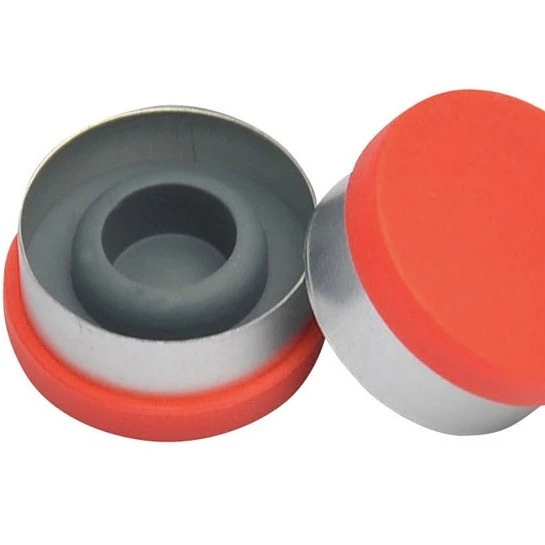
Rubber Stopper For Syringe
Product Name: Rubber stopper
Specifications: 13mm 15mm 20mm 28mm 32mm
Material: Butyl rubber
Color: Grey or customized
Productivity: 1000000 pcs/day
- Fast Delievery
- Quality Assurance
- 24/7 Customer Service
 Full Customization
Description
· Siliconized Rubber Stopper
· self - sealing re-seal performance data
Rubber plungers for pre-filled syringes · siliconized rubber stoppers · technical specs for syringes
Rubber Stopper
for Syringe
Siliconized Rubber Plunger · Self-Sealing
Performance · Technical Specs for Syringes
Silicone oil treated · low friction · repeated puncture re-seal · pre-filled syringe / vial plunger
|
Siliconized Surface treatment |
Low friction Glide force |
Self-sealing Re-seal ability |
>100 punctures Tested cycles |
USP <381> Test basis |
Butyl/Bromobutyl Elastomer |
Siliconized rubber stoppers - what the treatment does
Siliconization is a surface treatment in which a thin layer of medical-grade silicone oil is applied to the rubber stopper - either by spray application or by tumbling the stoppers in a silicone oil bath. The treatment does not change the bulk elastomer properties of the stopper; it modifies only the surface, creating a lubricating film that significantly reduces friction at every interface the stopper contacts.
spray
Silicone oil spray application
Thin film · medical-grade silicone
A fine, controlled spray of medical-grade silicone oil (typically polydimethylsiloxane, PDMS) is applied to the stopper surface, forming a thin, even lubricating film. Spray application allows precise control of the oil quantity per stopper - important because both insufficient and excessive silicone levels create downstream problems (sticking, or silicone migration into the drug product).
✓ Medical-grade PDMS silicone oil
✓ Controlled, even coating thickness
✓ Quantity per unit verified by QC weighing

glide
Plunger glide force reduction
−40% to −60% typical force reduction
For pre-filled syringe applications, the siliconized stopper (functioning as the plunger seal) must slide along the syringe barrel wall smoothly when the user depresses the plunger. Without siliconization, dry rubber-on-glass or rubber-on-plastic contact produces high static friction and a "stick-slip" motion - uneven, jerky injection delivery. Siliconization typically reduces glide force by 40–60% compared to an untreated stopper of the same elastomer.
✓ Smooth, continuous plunger motion
✓ Eliminates stick-slip force spikes
✓ Consistent dose delivery rate for the patient

insert
Insertion / stopper-fitting friction
Vial stoppering · automated line speed
For vial (rather than syringe) applications, siliconization also reduces the friction during the stoppering process itself - the moment the rubber stopper is inserted into the vial neck on the filling line. Lower insertion friction allows higher fill-line speeds and reduces the risk of stopper damage or misalignment during high-speed automated stoppering.
✓ Faster automated stoppering line speed
✓ Reduced stopper misalignment risk
✓ Lower mechanical stress during insertion

non-siliconized
Baseline rubber surface
High friction · stick-slip
An untreated rubber stopper has a naturally tacky, high-friction surface. Used as a plunger seal, this produces uneven force during depression - the user must apply increasing force to overcome static friction, then the plunger suddenly moves (the "slip" in stick-slip), producing inconsistent injection speed.
✗ High static friction at rest
✗ Uneven, jerky plunger motion
✗ Higher risk of vial stoppering misalignment

siliconized
Silicone oil treated surface
Low friction · smooth glide
A siliconized rubber stopper carries a thin, even silicone oil film that reduces surface friction substantially without affecting the elastomer's mechanical sealing properties. Plunger motion in a syringe is smooth and continuous; stopper insertion into a vial neck is faster and more consistent.
✓40–60% lower glide force
✓Smooth, continuous motion - no stick-slip
✓Faster, more reliable automated stoppering

Silicone level is a controlled, specified parameter
Silicone oil quantity is not "more is better" - excess silicone can migrate into the drug product or affect protein formulations in biologics, while insufficient silicone fails to deliver the friction reduction needed. The siliconization process is controlled to a target silicone level (commonly reported in μg/cm² of stopper surface) and verified by quality control sampling on every production lot. Silicone level data is available on request for formulation compatibility review.
Self-sealing performance - repeated puncture data
Re-seal integrity after repeated puncture - the data
For multi-dose vial applications, the rubber stopper must reseal itself after every needle withdrawal - closing back to an airtight, sterile barrier without leaving a permanent channel. This self-sealing property is the core functional requirement of the elastomer, and is characterised by repeated-puncture test data.
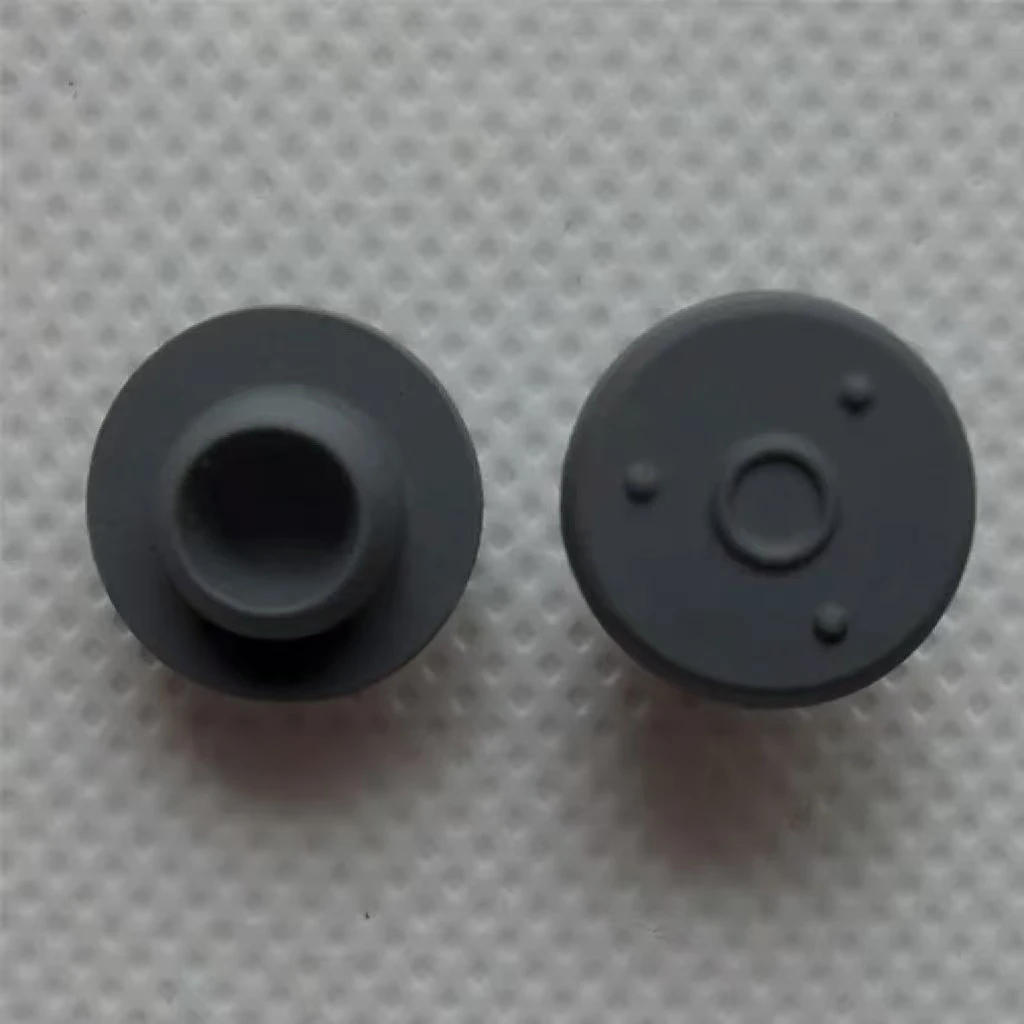
1
Needle insertion - temporary channel forms
As the needle passes through the rubber stopper, the elastomer is locally displaced and stretched around the needle shaft, forming a temporary channel. The elastomer's tensile and elastic properties determine how cleanly this channel forms - a good stopper material deforms without tearing or fragmenting (coring), which would otherwise introduce rubber particulate into the vial contents.
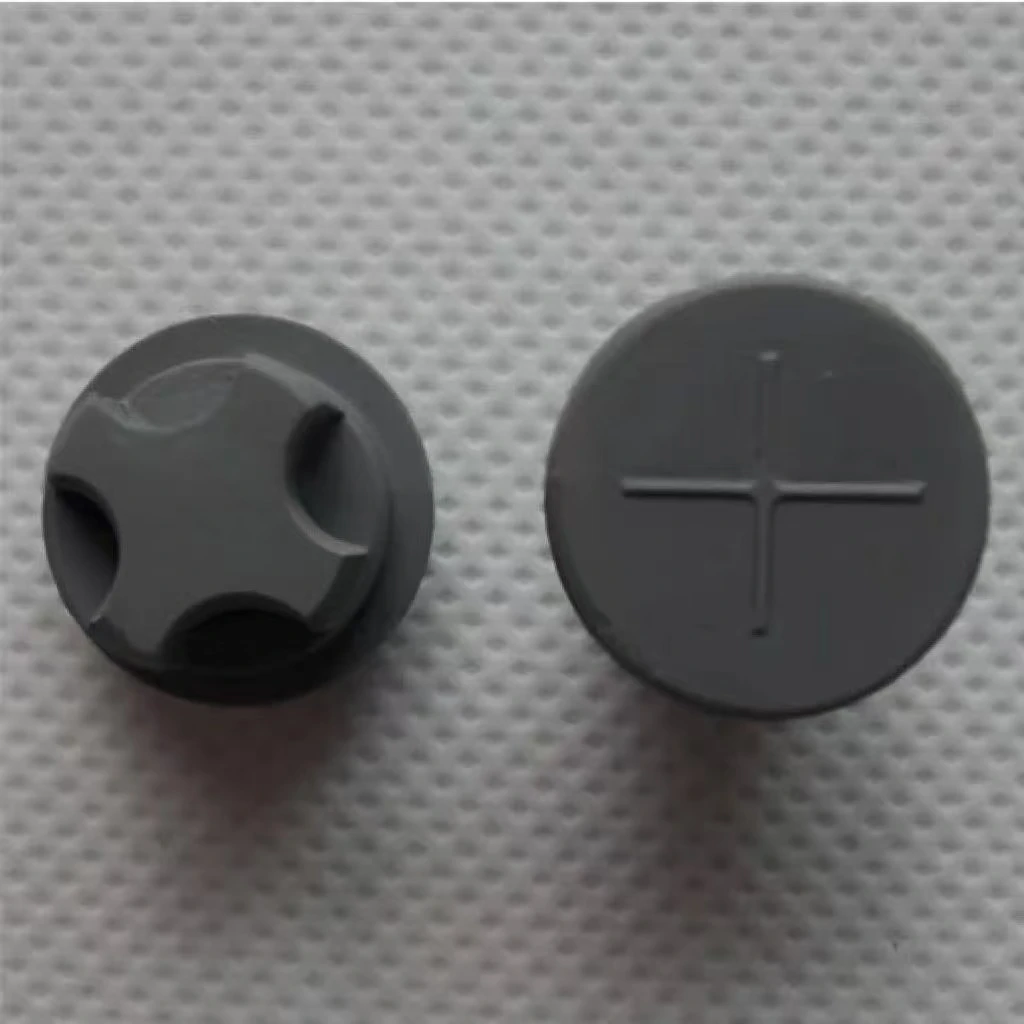
2
Needle withdrawal - elastic recovery begins
As the needle is withdrawn, the elastomer's stored elastic energy drives the displaced rubber back toward its original position. The speed and completeness of this recovery is governed by the rubber compound's elastic modulus and compression set properties - formulated specifically for self-sealing applications rather than general-purpose rubber compounds.
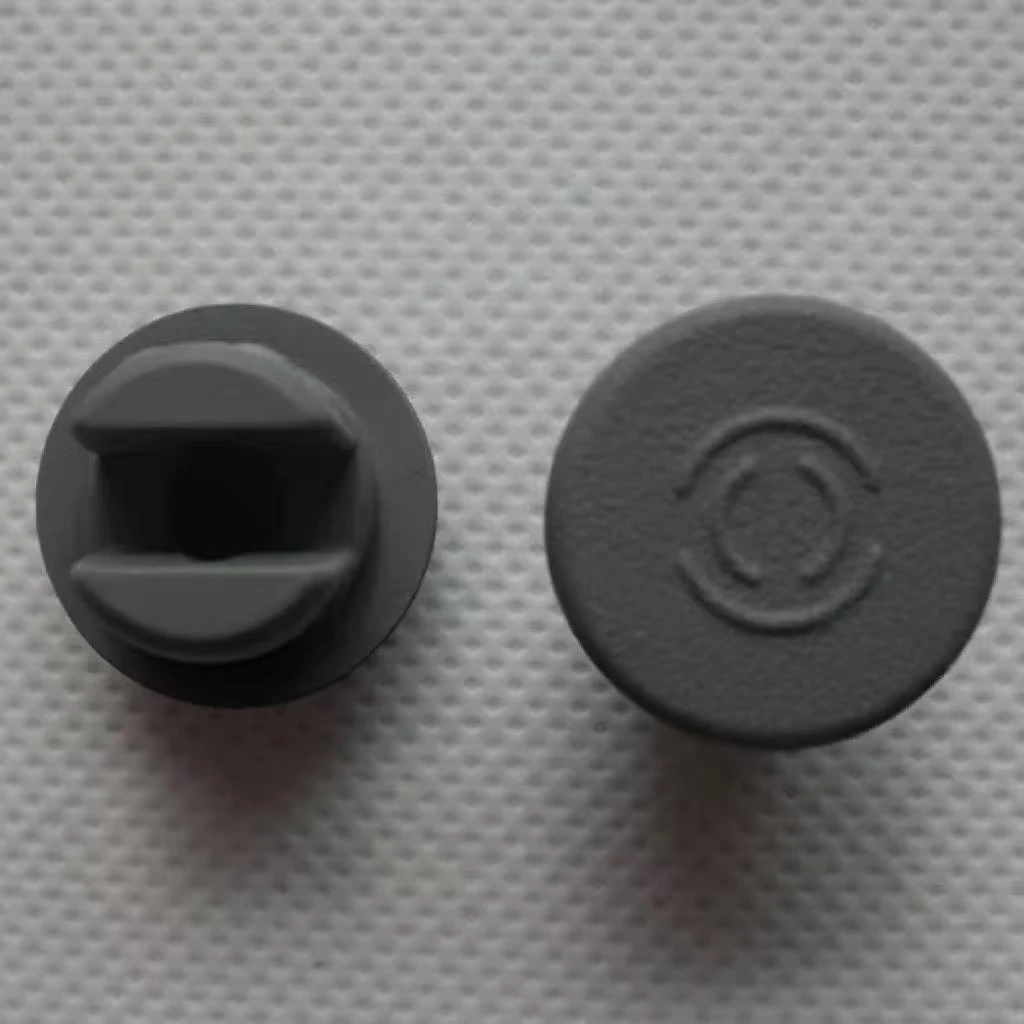
3
Full re-seal - no residual channel
A correctly formulated and dimensioned stopper fully recovers to its original closed state, with no detectable channel and no measurable change in container closure integrity. This re-seal must hold across repeated puncture cycles at the same general puncture zone, since multi-dose vials are punctured multiple times over their in-use period.
Technical Specs for Syringes - six engineering parameters
The rubber stopper and plunger specification for pre-filled syringe and vial applications is governed by a defined set of engineering parameters - covering friction, sealing, dimensional fit, and chemical compatibility.
< 8N
Plunger glide force (siliconized)
Break-loose & gliding force · ISO 7886-1 ref.
Typical maximum gliding force for a correctly siliconized plunger stopper in a 1ml–10ml syringe barrel, referenced against pharmacopoeial and ISO syringe performance guidance. Lower glide force values are achievable with higher silicone levels, balanced against migration limits.
> 100×
Validated puncture cycle count
Repeated puncture · re-seal integrity maintained
Self-sealing stoppers for multi-dose vial applications are tested across repeated puncture cycles (commonly >100 punctures in development testing) at a consistent puncture zone, confirming container closure integrity is maintained throughout the in-use period of the vial.
USP <381>
Elastomeric closure test reference
Physicochemical & functional testing basis
USP General Chapter <381> (Elastomeric Closures for Injections) provides the established physicochemical and functional test framework referenced for rubber stopper qualification - covering fragmentation, self-sealing capacity, and extractable substances testing protocols.

< 0.1%
Coring / fragmentation rate
Particulate generation on puncture
"Coring" is the generation of small rubber fragments when a needle punctures the stopper - an undesirable failure mode that introduces particulate into the drug product. Formulated self-sealing elastomers with correct needle-bevel-compatible surface hardness minimise coring incidence to well below typical acceptance thresholds.
40-50 Shore A
Hardness - durometer range
Shore A scale · puncture/reseal balance
Stopper hardness is specified within a defined Shore A durometer range - soft enough to allow clean needle penetration and elastic recovery, firm enough to maintain crimp-seal compression and resist deformation during transport and handling. The 40–50 Shore A range is typical for self-sealing injection stoppers.

Butyl / Br-butyl
Elastomer base compound
Low gas/moisture permeability · inert
Butyl and bromobutyl rubber compounds are the pharmaceutical industry standard elastomer base for injection stoppers - chosen for low gas and moisture vapour permeability (protecting sensitive formulations), chemical inertness (minimal extractables/leachables), and well-characterised long-term stability data across regulatory submissions.
Re-seal performance reference data
Container closure integrity - puncture cycle test reference
Representative re-seal performance data for siliconized butyl rubber stoppers across repeated puncture cycles at a 21G needle gauge, consistent puncture zone, illustrating the type of self-sealing performance characterisation used in stopper qualification.
| Puncture cycle | Re-seal integrity | Coring incidence | Visible channel |
|---|---|---|---|
| 1st puncture | Pass - full reseal | None observed | None |
| 10th puncture | Pass - full reseal | None observed | None |
| 25th puncture | Pass - full reseal | < 0.1% rate | None |
| 50th puncture | Pass - full reseal | < 0.1% rate | None at puncture zone centre |
| 100th puncture | Pass - within spec | Slightly elevated, in-spec | Minimal, off-centre punctures only |
| >100 punctures | Manufacturer-specific limit | Refer to product data sheet | Confirm max-use guidance |
This is representative reference data, not a guarantee for every formulation
Actual re-seal performance depends on the specific elastomer compound, stopper geometry, needle gauge, puncture location consistency, and storage conditions of your filled product. We provide lot-specific test certificates and can support customer-specific puncture validation studies using your actual fill volume and intended needle gauge. Always confirm the maximum validated puncture count for your specific multi-dose labelling claim.
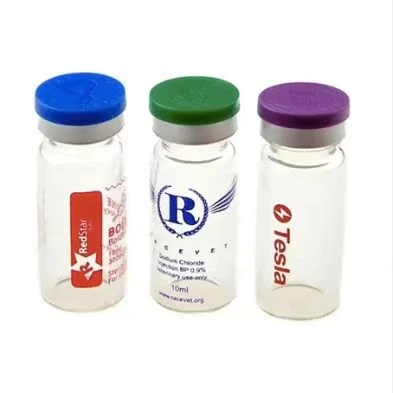
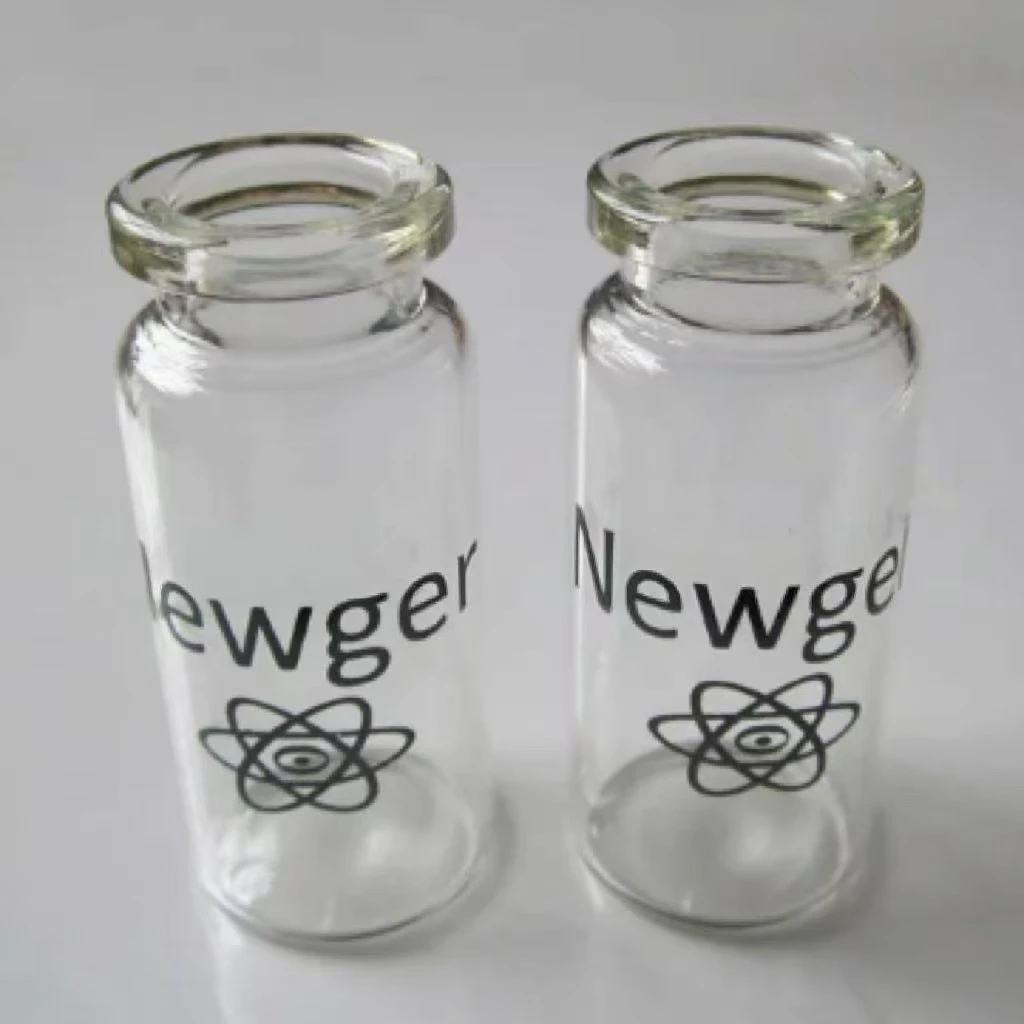
1. Serum vial 10ml clear glass, with black image and words written on the surface by slik screen printing.
2. Tubing glass serum vial can be various size, accept custom printing as clients request in custom colors.
3. We also supply glass vial kits in custom design, such as custom logo cap tops.
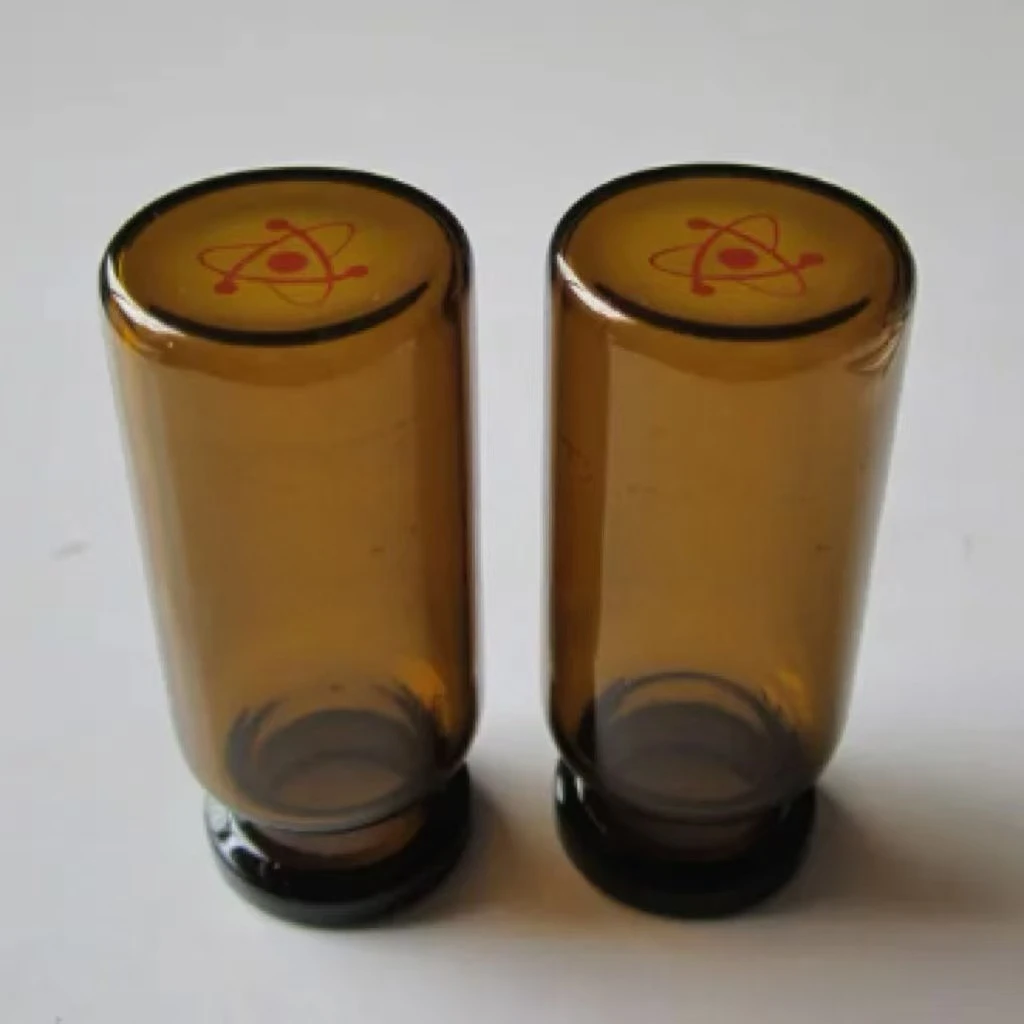
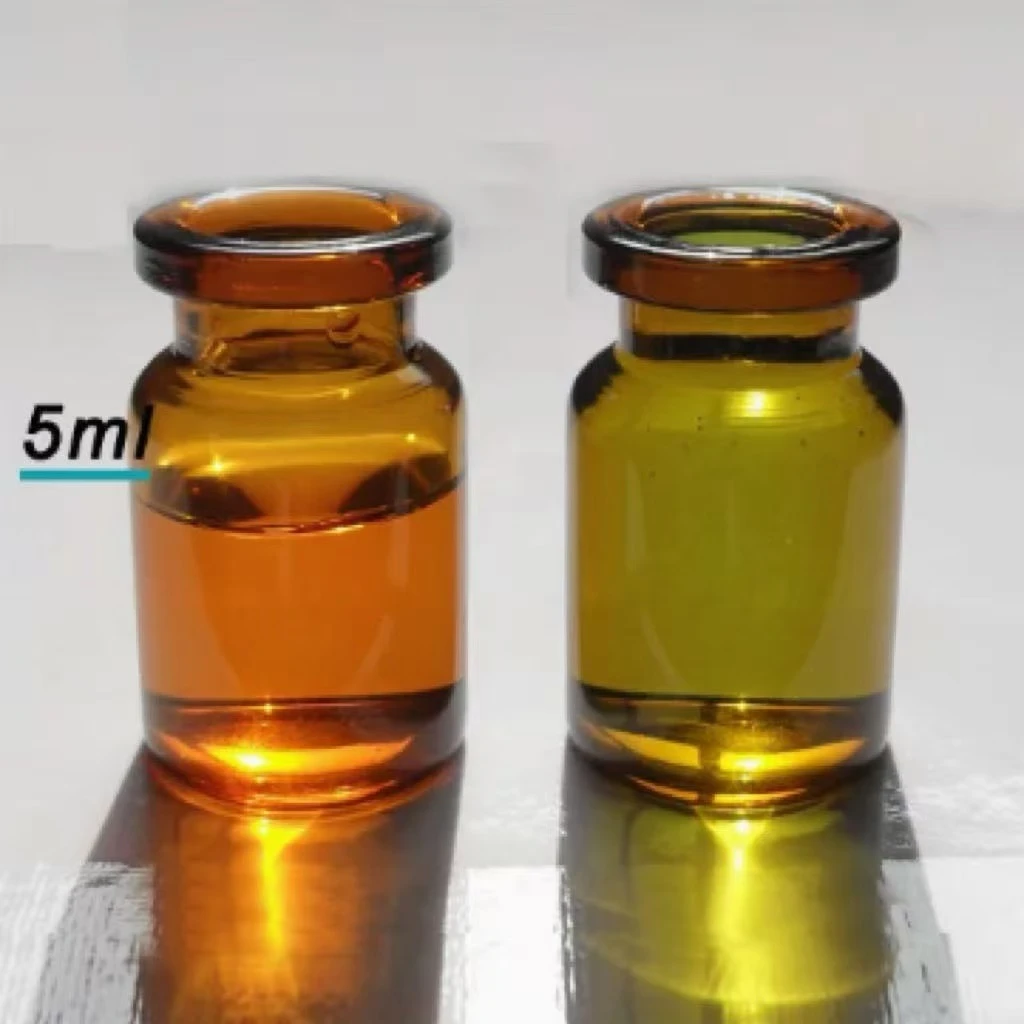
4. Printing bottle also can be amber colors, printing can be on the side or bottom of the bottles.
Complete specifications
Rubber stopper / plunger - full specification reference
Reference specifications for siliconized rubber stoppers and plungers used in pre-filled syringes and injection vials.
| Parameter | Syringe plunger application | Vial stopper application |
|---|---|---|
| Elastomer base | ||
| Compound | Butyl / bromobutyl rubber | Butyl / bromobutyl rubber |
| Hardness | 40–50 Shore A typical | 40–50 Shore A typical |
| Test reference | USP <381> / ISO 7886 | USP <381> |
| Siliconization | ||
| Treatment | Silicone oil spray ★ | Silicone oil spray or bath ★ |
| Friction reduction | 40–60% glide force reduction | Reduced insertion friction |
| Silicone level | Controlled - μg/cm² verified | Controlled - μg/cm² verified |
| Self-sealing & puncture performance | ||
| Re-seal capability | N/A - single-use plunger | Self-sealing ★ - multi-dose |
| Validated cycles | N/A | > 100 punctures (typical) |
| Coring rate | N/A | < 0.1% target |
| Sizing & compatibility | ||
| Syringe sizes | 1ml / 2ml / 3ml / 5ml / 10ml | - |
| Vial cap sizes | - | 13mm / 20mm / 32mm |
| Custom design | OEM/ODM available | OEM/ODM available |
Who orders this stopper
Siliconized rubber stoppers - across the injectable supply chain
Siliconized self-sealing rubber stoppers and plungers are specified wherever pre-filled syringes or multi-dose vials require low-friction, repeated-puncture-tolerant elastomer closures.

Pre-filled syringe manufacturers
PFS · plunger seal · smooth delivery
Pre-filled syringe producers requiring siliconized plunger stoppers for consistent, low-force injection delivery - particularly important for patient self-administration devices where high glide force causes injection discomfort.
 Peptide & biologics fillers
Multi-dose vial · repeated puncture
Peptide and biologics producers filling multi-dose vials - requiring validated self-sealing performance data to support multi-dose labelling claims and confirm container closure integrity across the product's in-use puncture cycle count.

Compounding pharmacies
Custom Rx · multi-dose vial stoppers
Compounding pharmacies preparing multi-dose injectable products - using siliconized stoppers with confirmed re-seal performance for products dispensed across multiple withdrawal events.

CDMOs & fill-finish
PFS & vial lines · consistent friction spec
Contract fill-finish organisations running automated syringe and vial filling lines - requiring stoppers with consistent siliconization levels to maintain stable line speeds and avoid plunger sticking or stopper misalignment.

Biotech & clinical supply
IMP · formulation compatibility
Biotech clinical supply teams evaluating stopper compatibility with sensitive biologic formulations - requiring documented silicone level data to assess extractables risk for protein-based investigational products.
 packaging component distributors
B2B · butyl/bromobutyl range
Pharmaceutical component distributors stocking siliconized rubber stoppers across standard sizes and elastomer formulations for downstream injectable product manufacturers.
Custom logo printing injection vial
Custom printing sign injection vial 10ml, specific printing logo on the 10ml glass bottle for benzyl benzoate packin
Country of Origin: China
Specifications:
· Diameter: 22mm
· Height: 50mm
· Volume: 10ml
· Color: Clear
· Material: Glass
Product Description:
1. Custom logo printing on the 10ml glass vial bottle for medical use.
2.10ml glass vial printing logo with steriled rubber stopper
3. Custom logo can be printed in 4 color if you need on the injection glass bottle.
4. We supply custom printing glass vial with custom logo rubber stopper and custom logo cap.
20mm red butyl rubber stopper with custom logo engraved
20mm custom logo butyl rubber stopper, 20mm red customized printing embossed, 20mm special symbol custom logo
Country of Origin: China
Specifications:
· Size: 20mm
· Color: Red or other colors according your request
· Material: Bromobutyl rubber and chlorobutyl rubber
· Service: Custom logo/words can be printed or not
Product Description:
1. 20mm red color butyl rubber stopper can be with your custom logo, company name or printing engraved.
2. We supply butyl rubber stopper, cap and injection vial with custom logo printing.
3. 20mm rubber stopper with custom logo in different color choose.
4. Samples can be available to check the quality before ordering.

Low Friction. Self-Sealing.
Engineered for repeated use.
Request a free sample of the siliconized rubber stopper or plunger - with silicone level data and re-seal puncture test results for your syringe or vial format. We confirm sizing and elastomer compatibility within 48 hours.
Hot Tags: rubber stopper for syringe, China rubber stopper for syringe manufacturers, suppliers, Medical Bottle Glass Vials Use Rubber Stopper, 20mm Butyl Vial Rubber Stopper, Rubber Stopper for Liquid Powder Vial, 13mm 20mm Coated Bromobutyl Vial Rubber Stopper, Small Injection Tubular Bottle Vial Rubber Stopper, Blue Butyl Vial Rubber Stopper Septum 20mm
Send Inquiry
You Might Also Like


