


Chlorobutyl Vial Rubber Stopper
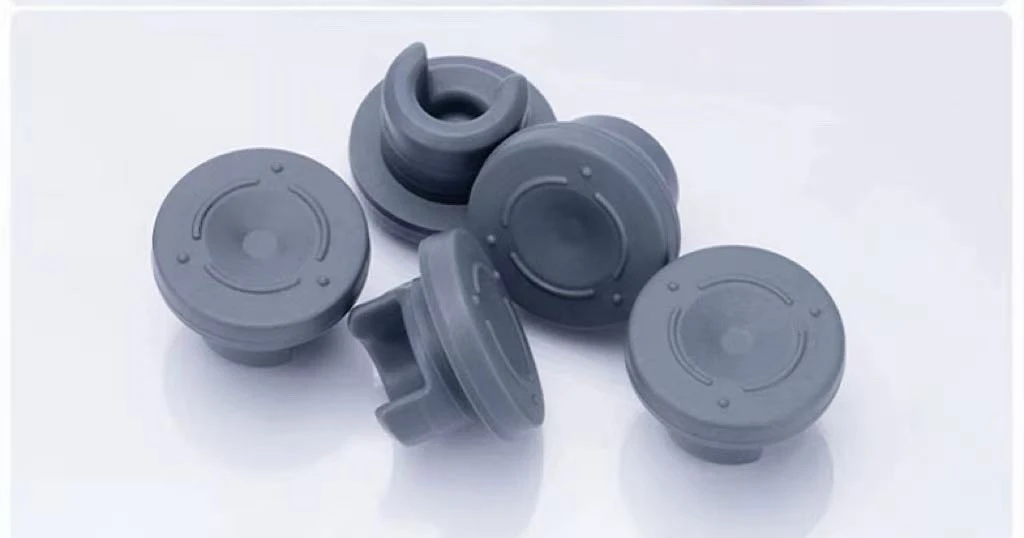
The Chlorobutyl Vial Rubber Stopper is an essential component of a high-quality pharmaceutical vial. Made of premium-grade chlorobutyl, this vial stopper ensures that your medication remains safe, pure, and potent. With a secure seal, it prevents oxygen, contaminants, and moisture from entering the vial and compromising the integrity of the contents.
- Fast Delievery
- Quality Assurance
- 24/7 Customer Service
 Full Customization
Description
Product description

Grey butyl rubber stopper
13mm/20mm size available

Silicone rubber stopper
13mm/20mm size available

Other rubber stopper
13mm/20mm size available
|
Spec. |
stock# |
Crown diameter mm |
Crown Thicknesses mm |
Plug diamter mm |
Totla height mm |
|
13-A3 |
3115 |
12.50 |
2.00 |
7.50 |
6.00 |
|
20-B1 |
3419 |
18.80 |
3.30 |
13.15 |
7.70 |
|
28-A2 |
3506 |
26.70 |
3.80 |
17.80 |
9.70 |
|
32-A2 |
3602 |
30.70 |
5.00 |
23.30 |
11.60 |
Chlorobutyl Vial Rubber Stopper · CIIR · 13mm · 20mm
Chlorinated Butyl Rubber · Acid-Sensitive APIs · Lyo · USP <381> · EP 3.2.9 · ISO 8362-5
chlorobutyl vial rubber stopper · CIIR · 13mm · 20mm · pharmaceutical injectable · USP EP ISO 8362
Chlorobutyl
Vial Rubber Stopper
CIIR · 13mm & 20mm · Acid-Sensitive Formulations · Lyophilisation · Bromine-Free Extractables · USP <381> · EP 3.2.9
Chlorinated butyl rubber elastomer · where chlorobutyl is specified over bromobutyl · serum and lyo stopper profiles · factory-direct
|
CIIR ★ Chlorobutyl rubber |
13mm Small vial size |
20mm Standard size |
Serum + lyo Both profiles |
USP/EP/ISO Compliant |
Br-free Extractables ★ |
Request chlorobutyl stopper sample
Request TDS / extractables data
CIIR vs BIIR comparison enquiry
What chlorobutyl rubber is - the chemistry
Chlorobutyl rubber (CIIR) - the halogenated butyl elastomer with chlorine substitution
Chlorobutyl rubber (CIIR - chlorinated isobutylene-isoprene rubber) is one of two halogenated butyl rubbers used in pharmaceutical vial stopper manufacture. The other is bromobutyl rubber (BIIR). Both start from the same base polymer - isobutylene-isoprene copolymer (IIR, butyl rubber) - and undergo a halogenation reaction that introduces reactive halogen atoms into the polymer chain. In CIIR, the halogen introduced is chlorine (Cl); in BIIR, it is bromine (Br). This single substitution difference between CIIR and BIIR has meaningful practical consequences for their extractables profiles, cure chemistry, and specific application suitability in pharmaceutical packaging.

The isobutylene-isoprene backbone - shared properties
Because CIIR and BIIR both derive from the same IIR backbone polymer, they share the fundamental performance properties of butyl rubber that make it the pharmaceutical industry's preferred stopper elastomer: extremely low gas permeability (the lowest of any commercial elastomeric material - important for maintaining headspace integrity and protecting oxygen-sensitive formulations), excellent chemical resistance to a wide range of aqueous formulations, and reliable self-sealing performance after needle puncture (elastomeric recovery that reseals the puncture channel after needle withdrawal).
The butyl backbone also provides a well-characterised baseline extractables profile compared to other elastomers - the compounding chemistry (vulcanisation agents, antioxidants, fillers, and processing aids) is well-understood and the extractables literature is extensive. Both CIIR and BIIR share this advantageous baseline.

The halogenation step - where CIIR and BIIR diverge
The halogenation reaction that converts IIR into CIIR or BIIR introduces reactive halogen atoms at specific positions on the isoprene units of the polymer chain. These halogen substituents participate in the vulcanisation (curing) reaction - they are the reactive sites that cross-link the polymer chains during the manufacturing of the rubber compound. The identity of the halogen (chlorine vs bromine) affects the reactivity of these cure sites, the kinetics of vulcanisation, and - critically for pharmaceutical applications - the nature of the halogen-derived species that can potentially be extracted from the cured stopper by the pharmaceutical formulation during fill-hold and shelf life storage.
CIIR produces chlorine-derived extractable species (chlorinated organics). BIIR produces bromine-derived extractable species (brominated organics). Whether this difference matters for a specific formulation depends on the formulation's sensitivity to these species - which is the central question the chlorobutyl vs bromobutyl stopper selection decision must answer.

Chlorobutyl vs bromobutyl - which to specify and why
CIIR versus BIIR - a practical guide to stopper elastomer selection
The choice between chlorobutyl (CIIR) and bromobutyl (BIIR) stoppers is a formulation science decision - it depends on the specific formulation's compatibility requirements, regulatory expectations, and the results of a container-closure compatibility study. The following comparison provides the framework for making that decision.

Chlorobutyl rubber stopper
Chlorine halogenation · Br-free extractables · specific applications
CIIR produces chlorinated organic extractable species - not bromine-derived species. For formulations where bromine-derived extractables are a concern (either because the formulation is analytically sensitive to brominated species, because the AEI/AET calculations specifically flag bromine-derived species, or because of specific regulatory expectations for the formulation's indication or market), CIIR offers an extractables profile free of bromine-derived organics. CIIR is also associated with slightly different cure kinetics than BIIR, which affects the residual extractable levels of certain vulcanisation-derived species.
✓. Bromine-free extractables profile ★
✓. Chlorine-derived extractable species instead
✓. Shared IIR backbone - same gas barrier performance
✓. Self-sealing after puncture - same as BII.
✓ Good chemical resistance - aqueous and non-aqueous
Bromobutyl rubber stopper (reference)
Bromine halogenation · standard pharmaceutical choice · wider use
BIIR (bromobutyl rubber) is the pharmaceutical industry's more widely used halogenated butyl stopper elastomer - it is the default specification for the majority of injectable vial applications globally. BIIR offers a well-characterised, extensively documented extractables profile and is the elastomer most commonly referenced in pharmacopoeial literature and regulatory submissions. For most formulations, BIIR is the appropriate starting point for stopper selection. CIIR is specified when a specific formulation compatibility or extractables-profile reason makes BIIR suboptimal for that particular application.
✓. Industry standard - most widely specified ★
✓. Bromine-derived extractables (well-characterised)
✓. Extensive pharmacopoeial and regulatory literature
✓. Same IIR backbone - same gas barrier and self-sealing
✓. Default choice for most injectable formulations

CIIR vs BIIR - specification decision reference
| Parameter | CIIR · Chlorobutyl ★ | BIIR · Bromobutyl |
|---|---|---|
| Halogen substituent | Chlorine (Cl) ★ | Bromine (Br) |
| Halogen-derived extractables | Chlorinated organics - Br-free ★ | Brominated organics |
| Industry prevalence | Less common - specific applications | Standard · most widely used ★ |
| Gas permeability (O₂, moisture) | Equivalent - both IIR backbone | Equivalent - both IIR backbone |
| Self-sealing after puncture | Equivalent performance | Equivalent performance |
| Cure chemistry reactivity | Slightly lower than BIIR | Slightly higher halogen reactivity |
| Pharmacopoeial references | USP <381> / EP 3.2.9 - both covered | USP <381> / EP 3.2.9 - both covered |
| Preferred for acid-sensitive APIs | Yes - considered in some protocols ★ | Typically equivalent, case-by-case |
| Lyophilisation compatibility | Compatible - both profiles available | Compatible - both profiles available |
| When to specify CIIR over BIIR | Br-sensitive formulation / specific E&L requirement ★ | Default - most formulations |
Neither CIIR nor BIIR is universally superior - the correct choice depends on the specific formulation
CIIR is not categorically better than BIIR, nor is it a universal upgrade. The choice between them is determined by the formulation's specific compatibility requirements, the extractables and leachables (E&L) assessment findings, and the regulatory expectations for the particular drug product and market. For the majority of aqueous pharmaceutical injectable formulations, bromobutyl (BIIR) is the appropriate starting specification - it is the more extensively documented elastomer in pharmacopoeial and regulatory literature. CIIR is specified when a specific formulation-level reason makes bromine-derived extractables a particular concern - for example, when a formal E&L study shows a specific brominated extractable at or above the analytical evaluation threshold (AET) that cannot be reduced by other means, or when the formulation development team has identified a formulation-specific sensitivity to bromine-derived species.
When chlorobutyl is specified - specific use cases
Three scenarios where CIIR is the correct stopper choice - not bromobutyl
While BIIR is the default, there are well-defined scenarios where the formulation science or extractables data points to CIIR as the more appropriate stopper elastomer. These are the three principal use cases.

01
Bromine-sensitive formulations and E&L-driven selection
E&L programme · AET exceedance · Br-derived species
The most concrete, data-driven reason to specify CIIR over BIIR is a finding in the extractables and leachables (E&L) programme that a bromine-derived extractable species from the BIIR stopper appears at a concentration above the analytical evaluation threshold (AET) in the drug product. If the bromine-derived species cannot be reduced to below AET through formulation adjustment, stopper washing, or coating, then switching from BIIR to CIIR eliminates that specific class of extractable - replacing it with chlorine-derived species, which may have a different (and in the specific context, more acceptable) toxicological profile. This is a data-driven switch, made on the basis of E&L study results, and requires re-running the extractables study with the CIIR stopper to characterise the new extractables profile.
✓ Brominated extractable above AET in E&L study
✓ Cannot reduce Br-species below AET by other means
✓ CIIR eliminates Br-derived species class
✓ New CIIR E&L profile must be characterised

02
Acid-sensitive API formulations
pH-sensitive · acid degradation · formulation-specific
Certain pharmaceutical formulations contain active pharmaceutical ingredients (APIs) that are particularly sensitive to trace acid exposure - for example, formulations of acid-labile prodrugs, certain peptides and proteins where acidic extractables can cause deamidation or hydrolysis, and formulations at the high end of the pH range where trace acid contamination disproportionately shifts the pH. In some of these formulations, brominated extractables from BIIR stoppers - which include HBr-generating species under certain contact conditions - can cause a detectable increase in solution acidity during shelf life. CIIR, whose chlorine-derived extractables have a different acid-generation profile under formulation contact conditions, has been investigated in some of these contexts as an alternative. Whether this is the right choice for any specific formulation must be confirmed by formulation-specific compatibility study.
✓ Acid-labile APIs sensitive to trace acidic extractables
✓ pH-sensitive formulations at neutral-to-high pH
✓ Formulations with tight pH-stability windows
✓ Confirm by compatibility study for specific formulation

03
Lyophilised products with specific moisture and compatibility requirements
Lyo compatibility · moisture permeability · headspace control
Both CIIR and BIIR are suitable for lyophilisation stoppers (two-leg profile) and both share the low moisture vapour permeability of the butyl rubber backbone - making both elastomers appropriate for the headspace moisture control that is critical in lyophilised drug products. However, in some lyophilised biologic formulations where the dried protein cake is particularly sensitive to even trace levels of specific extractables during long-term frozen or ambient storage, the CIIR stopper's different extractables profile may offer a lower burden of specific species of concern. The choice between CIIR and BIIR lyo stoppers is made on the same extractables-profile grounds as for liquid formulations - the lyo format introduces no additional reason to prefer one over the other absent formulation-specific data.
✓ Low moisture vapour transmission - same as BIIR
✓ Two-leg lyo profile available in CIIR
✓ Different extractables profile may suit specific lyo products
✓ Choice confirmed by lyo product E&L study
Practical advice: run the E&L study with both CIIR and BIIR if you are uncertain which to specify
If you are in formulation development and unsure whether CIIR or BIIR is the better elastomer for your injectable product, the most robust approach is to request samples and Technical Data Sheets (TDS) for both, then run your controlled extractables study under conditions consistent with the BioPhorum Operations Group (BPOG) protocol using both stoppers in parallel. The E&L data will directly show which extractable species each stopper introduces into your formulation matrix, at what concentrations, and under what storage conditions - giving you an evidence-based answer rather than a theoretical preference. We supply both CIIR and BIIR stoppers in 13mm and 20mm formats with full extractables TDS documentation for exactly this purpose.
Size and stopper profile guide
Chlorobutyl stopper - 13mm and 20mm in serum and lyo profiles
The chlorobutyl rubber stopper is available in both standard pharmaceutical vial sizes - 13mm and 20mm - and in both the standard serum (one-piece) stopper profile and the two-leg lyophilisation stopper profile.

Chlorobutyl stopper - 13mm
2ml · 3ml · 5ml small vials · serum or lyo profile
✓ For 2ml–5ml vials with 13mm ISO 8362-2 neck finish
✓ Serum (standard) profile - for liquid injectables
✓ Two-leg (lyo) profile - for lyophilised small vials
✓ PTFE-coated CIIR available for lower extractables
✓ USP <381> / EP 3.2.9 compliant
chlorobutyl stopper - 20mm *
5ml–50ml standard vials · most common CIIR format
✓ For 5ml–50ml vials with 20mm ISO 8362-2 neck finish
✓ Most common CIIR stopper format ★
✓ Serum profile - for liquid and oil-based injectables
✓ Two-leg (lyo) profile - for lyophilised biologics
✓ PTFE-coated CIIR available - ultra-low extractables

PTFE-coated CIIR - for the lowest extractables of any chlorobutyl stopper
The PTFE or fluoropolymer coating option available on BIIR stoppers is equally available on CIIR stoppers - PTFE-coated chlorobutyl stoppers provide the lowest possible extractables burden for a chlorobutyl elastomer by applying an inert fluoropolymer barrier between the rubber compound and the formulation contact surface. For formulations where CIIR has been selected for its bromine-free profile but further reduction of all extractables is desired, the PTFE-coated CIIR stopper combines both advantages: no bromine-derived extractables from the rubber compound (blocked by the PTFE barrier) and no bromine-derived extractables from halogen substituents potentially accessible under formulation contact conditions. Request the coated CIIR TDS alongside the uncoated CIIR TDS for comparison.
Applications - who specifies chlorobutyl stoppers
Three contexts where CIIR stoppers are specified - not as a default, but as a deliberate choice
Chlorobutyl stoppers are specified when a specific formulation-level reason makes CIIR preferable to the standard BIIR - these are the three principal contexts.
Extractables-and-leachables programme outcome
The most scientifically grounded context for CIIR specification is an E&L programme finding where bromine-derived extractables from a BIIR stopper appear at concentrations that require documentation, qualification, or mitigation. Under ICH Q3D, USP <1664>, and the BioPhorum Operations Group extractables framework, individual leachable species must be characterised and assessed against their AET and relevant toxicological thresholds. Where a brominated extractable from BIIR exceeds its AET and cannot be mitigated adequately by stopper washing, coating, or formulation adjustment alone, switching to CIIR removes the entire class of bromine-derived extractables - replacing it with chlorine-derived species that are separately assessed and may have a different, more acceptable toxicological or AET status for the specific formulation and indication.
Biologic injectables with stringent E&L requirements
Small-molecule APIs where Br-derived AET is exceeded
Formulations requiring regulatory E&L submission package
Re-formulation projects switching from BIIR to CIIR

Acid-sensitive and pH-critical injectable formulations
Injectable formulations containing acid-labile APIs, or formulations where tight pH stability over the shelf life is a critical quality attribute, may benefit from compatibility testing with CIIR stoppers where compatibility studies with BIIR show pH drift or API degradation attributable to acidic extractable species with a bromine origin. This is a less common but documented rationale for CIIR specification, particularly in the development of injectable prodrug formulations and certain peptide injectables where acid-catalysed hydrolysis of the API is a principal degradation pathway. The choice must always be confirmed by formulation-specific compatibility data - the general principle cannot be applied without testing.
Acid-labile prodrug injectable formulations
pH-critical peptide and protein injectables
Ester-prodrug formulations sensitive to acid hydrolysis
Formulations where BIIR caused pH shift in stability study

regional regulatory expectations and established practices
In certain pharmaceutical markets and regulatory jurisdictions, CIIR has historically been more widely used than BIIR - either because of regional manufacturing traditions, historical supply chain choices, or regional pharmacopoeial conventions. A company entering a new market (particularly certain Asian and European markets) may find that existing reference products or local generic equivalents have used CIIR stoppers, creating a regulatory expectation of CIIR in the container-closure system description for that product category. In this context, CIIR specification is driven not by formulation chemistry but by the need to align the packaging specification with established regional practice or with a reference medicinal product's packaging system to support a regulatory comparability argument.
Products entering markets with established CIIR conventions
Generic products referencing a CIIR-stoppered innovator
Regulatory comparability to reference medicinal product
Established regional manufacturing practice alignment
Complete specifications
Chlorobutyl vial rubber stopper - full specification reference
Reference specifications for 13mm and 20mm chlorobutyl (CIIR) rubber stoppers in serum and lyophilisation profiles.
| Parameter | 13mm CIIR stopper | 20mm CIIR stopper ★ |
|---|---|---|
| Elastomer and chemistry | ||
| Elastomer type | Chlorobutyl rubber (CIIR) ★ | Chlorobutyl rubber (CIIR) ★ |
| Halogen substituent | Chlorine (Cl) | Chlorine (Cl) |
| Extractables class | Chlorinated organics - Br-free | Chlorinated organics - Br-free |
| Shore A hardness | 40–55 Shore A | 40–55 Shore A |
| Stopper profiles available | ||
| Serum (standard) profile | Yes ★ | Yes ★ |
| Two-leg lyo profile | Yes | Yes |
| Coating option | Uncoated · PTFE/FP coated | Uncoated · PTFE/FP coated |
| Performance | ||
| Gas permeability (O₂ / moisture) | Low - IIR backbone | Low - IIR backbone |
| Self-sealing after puncture | Yes - equivalent to BIIR | Yes - equivalent to BIIR |
| Sterilisation | Autoclave 121°C compatible | Autoclave 121°C compatible |
| Compliance and documentation | ||
| Pharmacopoeial standard | USP <381> · EP 3.2.9 | USP <381> · EP 3.2.9 |
| ISO standard | ISO 8362-5 | ISO 8362-5 |
| Extractables TDS | Full TDS - BioPhorum consistent | Full TDS - BioPhorum consistent |
| Sample | Free - with TDS on request | Free - with TDS on request |
The Chlorobutyl Vial Rubber Stopper is an essential component of a high-quality pharmaceutical vial. Made of premium-grade chlorobutyl, this vial stopper ensures that your medication remains safe, pure, and potent. With a secure seal, it prevents oxygen, contaminants, and moisture from entering the vial and compromising the integrity of the contents.
Our Chlorobutyl Vial Rubber Stopper is designed to meet the highest standards of quality, safety, and functionality. It is produced under strict quality control processes and is extensively tested for its performance and compatibility with various medications.
In addition to its superior material and construction, our Chlorobutyl Vial Rubber Stopper is also extremely easy to use. It features a simple snap-cap design that allows you to quickly and easily seal your vials.
Whether you're a pharmaceutical company, a research institute, or a medical facility, you can rely on our Chlorobutyl Vial Rubber Stopper to protect the potency and safety of your medication. With its high-quality construction, ease of use, and proven performance, it's the perfect choice for any vial packaging needs.

Who specifies chlorobutyl stoppers
Chlorobutyl vial rubber stopper - who orders and why
Chlorobutyl stoppers are ordered by pharmaceutical organisations with a specific, documented reason to prefer CIIR over the more widely used BIIR - driven by E&L data, formulation compatibility findings, or regulatory considerations.
Pharmaceutical formulation scientists
E&L assessment · container-closure selection
CMC formulation teams selecting stopper elastomers based on E&L programme data - requesting CIIR TDS and samples to run parallel extractables studies alongside BIIR for evidence-based elastomer selection.


Analytical chemistry and packaging labs
Extractables · leachables · BioPhorum protocol
Packaging analytical teams running BioPhorum-consistent extractables programmes on candidate stoppers - needing CIIR stopper samples and TDS to characterise the chlorobutyl extractables profile as part of container-closure compatibility assessment.
Biologic drug manufacturers
mAb · protein · biologic E&L sensitivity
Manufacturers of sensitive biologic injectables where a formal E&L programme has identified a bromine-derived leachable species of concern in BIIR-stoppered vials, leading to a switch to CIIR as part of the mitigation strategy.


Generic pharmaceutical companies
Reference product alignment · regulatory
Generic manufacturers referencing an innovator product that uses CIIR stoppers in its packaging - specifying CIIR to align with the reference container-closure system and support the regulatory comparability argument.
CDMOs - multi-client fill-finish
Client-specified · CIIR platform option
Contract fill-finish organisations whose client products include both BIIR-specified and CIIR-specified products - needing CIIR stoppers as a stocked platform option alongside the standard BIIR offering.


Clinical supply and CMC development
Phase I–III · stopper selection · parallel study
Clinical supply teams and CMC development scientists running Phase I–III clinical manufacturing batches using CIIR as the selected stopper elastomer, requiring GMP-grade CIIR stoppers with full documentation for regulatory submission.

Chlorobutyl. Bromine-free. Specified for a reason.
13mm and 20mm CIIR stopper - sample and extractables TDS within 48 hours.
Tell us your vial size (13mm or 20mm), stopper profile (serum or lyo two-leg), coating preference (uncoated or PTFE-coated), and whether you also need the BIIR TDS for parallel comparison - we'll dispatch free samples and the full extractables documentation within 48 hours.

Hot Tags: chlorobutyl vial rubber stopper, China chlorobutyl vial rubber stopper manufacturers, suppliers, Glass Vial with Cap Rubber Stopper, Medical Bottle Glass Vials Use Rubber Stopper, 20mm Butyl Vial Rubber Stopper, Rubber Stopper for Liquid Powder Vial, 13mm 20mm Coated Bromobutyl Vial Rubber Stopper, Vial Rubber Stoppers
Send Inquiry
You Might Also Like

