


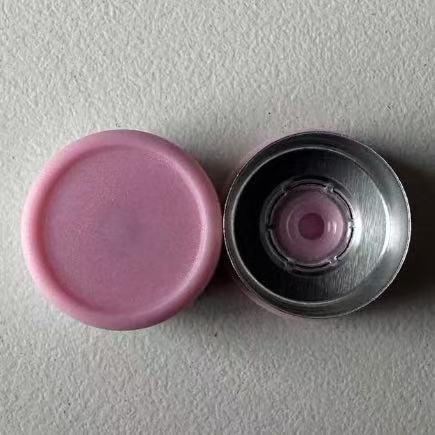


Flip Off Seal For Injection Vials
13mm small vial size
20mm standard size
4 layers composite structure
reliable seal, hermetic closure
easy penetration, needle access
sterilization, resistant
- Fast Delievery
- Quality Assurance
- 24/7 Customer Service
 Full Customization
Description
Flip Off Seals · 13mm / 20mm · Injectable Biologics
4-Layer Composite Closure · USP · EP · ISO 8362
flip off seals · 13mm 20mm · combination cap · injectable biologics · aqueous injection
Flip Off Seals
for Injectable Biologics & Aqueous
Injections
13mm & 20mm · 4-Layer Composite Closure · Reliable Seal · Easy Penetration · Sterilization-Resistant
Combination cap system - outer cap + inner cap + top cap + medical butyl rubber stopper · sterility-assured · pharmacopoeial compliant
|
13mm small vial sizes |
20mm standard size * |
4 layers composite structure |
reliable seal hermetic closure |
easy penetration needle access |
sterilization resistant |

Composite closure anatomy - 4-layer structure
4-layer combination cap - every layer serves a purpose
The pharmaceutical flip off seal is not a single component - it is a precisely engineered composite assembly of four distinct functional layers. Each layer has a defined role in achieving the combination of tamper evidence, hermetic seal, needle access, and sterilization compatibility required for injectable biologics and aqueous injections.
layer 1
Top flip tab (PP)
Tamper evidence · user action indicator
The polypropylene flip tab is the visible outer element - removed by the user before needle insertion. Its presence confirms the vial has not been previously accessed. Once removed, it exposes the rubber stopper surface for needle penetration. Can be produced in any colour for product line differentiation or anti-counterfeiting.

layer 2
Outer aluminum crimp shell
Structural shell · crimp-formed · compression force
The aluminum outer shell is crimp-formed over the vial neck after stoppering - its skirt wraps around the vial neck flange and the rubber stopper skirt, mechanically compressing the stopper into the neck and providing the holding force that maintains seal integrity over the product's shelf life. Aluminum is selected for its formability, non-reactivity, and compatibility with sterilization processes.

layer 3
Inner cap / protective liner (PP)
Stopper protection · contamination barrier · alignment
The inner polypropylene cap or liner sits between the outer aluminum shell and the rubber stopper surface - protecting the stopper's needle-penetration zone from direct metal contact, maintaining stopper alignment during assembly and sterilisation, and providing a clean intermediate surface. It also helps distribute the crimp force evenly across the stopper head.

layer 4
Medical butyl rubber stopper
Primary hermetic seal · needle penetration · self-sealing
The bromobutyl rubber stopper is the functional heart of the closure system - it creates the primary hermetic seal of the vial contents, allows needle penetration for product withdrawal or reconstitution, and self-seals immediately after needle withdrawal to prevent contamination ingress. It must meet USP <381> requirements and be compatible with the specific formulation and sterilization process used.

All four layers are designed as an integrated system - do not mix components across different cap manufacturers
The inner cap dimensions, crimp shell geometry, flip tab tab attachment, and stopper plug head diameter are all dimensionally co-specified within one manufacturer's combination cap design. Mixing layers from different manufacturers (e.g., a different inner cap with a different crimp shell) risks misalignment of the assembly, inconsistent crimp force distribution, and unreliable sealing. Always specify and source all four layers as a complete combination cap system from a single qualified supplier.
Performance claims - what this closure system delivers
Four critical performance requirements - all met by design
The combination cap for injectable biologics must satisfy four non-negotiable performance requirements simultaneously. The 4-layer composite design achieves all four.

primary requirement - sterility assurance
The combination cap must maintain an unbroken hermetic seal from the moment of capping through to the product's end of shelf life - protecting the sterile injectable contents from microbial ingress, oxygen exposure, and moisture. The crimped aluminum shell holds the butyl stopper under continuous compression against the glass neck, maintaining seal force even under temperature fluctuations during distribution and storage. Container closure integrity testing (CCIT) confirms seal performance for each validated closure configuration.
clinical use - consistent low penetration force
After removing the flip tab, the exposed rubber stopper surface must allow a hypodermic needle to penetrate cleanly with consistent, low insertion force - critical for both automated filling/reconstitution equipment and manual clinical administration. The butyl stopper formulation, Shore A hardness, and surface finish are optimised for the balance between sufficient hardness to maintain seal compression and low enough hardness to allow smooth needle insertion without coring or excessive insertion force.


multi-dose vials · contamination prevention
After needle withdrawal, the elastomeric memory of the butyl rubber stopper closes the puncture channel - self-sealing the penetration site to prevent microbial ingress between doses in multi-dose vials or during multi-step reconstitution procedures. Self-sealing performance is quantified by the post-puncture seal test in USP <381> and ensures that each needle insertion does not permanently compromise the closure's sterility barrier.
auto · gamma · EO - method dependent
The assembled combination cap must withstand the sterilization process applied to the closed vial - typically moist heat autoclave (121°C steam), gamma irradiation, or ethylene oxide (EO), depending on the formulation and manufacturing process. Butyl rubber retains its mechanical and sealing properties through validated autoclave cycles; aluminum is unaffected; the polypropylene inner cap is rated for standard autoclave temperatures. Confirm the specific sterilization method and cycle parameters with your supplier to ensure the selected cap construction has been validated for your process.

size selection - 13mm VS 20mm
13mm and 20mm combination caps - selecting the right size
The combination cap size is determined by the vial neck finish diameter. Both sizes share the same 4-layer composite construction and meet the same performance requirements - the choice is driven by vial format, not by the formulation type.

small vial combination cap
2ml · 3ml · 5ml vial · peptide / diagnostics
✓ 2ml–5ml tubular glass serum vials with 13mm neck
✓ Peptide single-dose vials, diagnostic reagent vials
✓ Paired with 13mm bromobutyl rubber stopper
✓ Suitable for biologics in small-volume injectable formats
Standard injection vial combination cap ★
5ml · 10ml · 20ml · most injectable formats
✓ 5ml–50ml injection vials - the most common pharmaceutical injectable format worldwide
✓ Biologics, vaccines, antibiotics, hormone injectables, lyophilized products
✓ Paired with 20mm bromobutyl serum or two-leg lyo stopper
✓ ISO 8362-2 tubular vial neck standard

Size is determined by vial neck finish - measure or confirm from your vial's technical drawing
13mm and 20mm refer to the nominal outer diameter of the vial neck that the cap is crimped onto. This is not the vial fill volume. The same fill volume can appear in vials with different neck finishes depending on manufacturer and vial type. Always confirm the neck finish from your specific vial's drawing or measure the neck OD before ordering combination caps - a 20mm cap will not crimp correctly onto a 13mm neck, and vice versa.
application areas - injectable formulation types
Widely applied across injectable formulation categories - biologics, aqueous injections, and more
The flip off seal combination cap is the standard closure for virtually all parenteral injectable drug formats where needle access is required - from simple aqueous injectables through to complex lyophilized biologics.
biologics
biological drug products
Proteins · mAb · vaccines · biosimilars
The combination cap is the primary closure format for all biological drug products in vial format - monoclonal antibodies, biosimilars, therapeutic proteins, and biologic vaccines - where the sterility and extractable profile requirements of the closure system are subject to the strictest regulatory scrutiny.
Monoclonal antibodies (mAb / biosimilar)
Lyophilized protein formulations
Biologic vaccines (liquid and lyo)
Cell therapy and gene therapy vials

aqueous injectables
small-molecule aqueous injections
IV · IM · SC · multi-dose
All aqueous small-molecule injectables - whether administered intravenously, intramuscularly, or subcutaneously - use the flip off seal combination cap as their standard closure. Multi-dose vials rely particularly on the self-sealing performance of the butyl stopper to maintain sterility across multiple needle punctures.
IV solution vials (antibiotics, analgesics)
IM / SC injectable drugs
Multi-dose injection vials
Electrolyte and infusion additives

specialty injectables
other parenteral formats
Hormones · diagnostics · oncology
Beyond biologics and conventional aqueous injectables, the flip off seal combination cap is used across a wide range of specialty parenteral formats - oil-based hormone injectables, diagnostic contrast agents, cytotoxic oncology drugs, and radiopharmaceuticals - wherever a vial-based injectable requires needle access under sterile conditions.
Oil-based hormone injectables
Oncology / cytotoxic drug vials
Diagnostic and contrast agent vials
Veterinary injectable products

compliance - pharmacopoeial and international standards
USP, EP, and ISO 8362 compliance - standards governing the combination cap
Three regulatory and standards frameworks govern the combination cap and its component parts - covering the rubber stopper, the glass vial interface, and the overall closure system performance.
USP <381>
Elastomeric Closures for Injections
Rubber stopper component · US pharmacopeia
USP <381> governs the rubber stopper component of the combination cap - its physicochemical properties (pH, colour, reducing substances, heavy metals), biological reactivity class, self-sealing performance, and fragmentation resistance. Compliance with USP <381> is a regulatory requirement for injectable drug products marketed in the United States and is referenced internationally.
EP 3.2.9
Rubber Closures for Containers for Aqueous Preparations
European Pharmacopoeia · aqueous injectable closure
EP 3.2.9 is the European equivalent standard for rubber closures used with aqueous parenteral preparations - covering extractable profile, penetrability, fragmentation, and physicochemical tests. Products marketed in Europe or in countries accepting EP standards require their rubber stopper to comply with EP 3.2.9. The extractable profile of the butyl stopper used in this combination cap is documented to EP 3.2.9 extraction conditions.
ISO 8362-5
Rubber Closures for Injection Vials
International standard · dimensional + performance
ISO 8362-5 specifies dimensional requirements, physicochemical tests, and performance criteria for rubber closures intended for use with injection vials manufactured per ISO 8362-1/2 - covering the same 13mm and 20mm neck formats used with this combination cap. ISO 8362-5 compliance is increasingly cited in international market regulatory submissions outside the US/EU pharmacopoeial framework.
complete specifications
Flip off seal combination cap - full specification reference
Reference specifications for the 13mm and 20mm flip off seal combination cap for injectable biologics and aqueous injections.
| Parameter | 13mm cap | 20mm cap |
|---|---|---|
| Construction | ||
| Layers | 4-layer composite ★ | 4-layer composite ★ |
| Layer 1 (flip tab) | PP - colour customisable | PP - colour customisable |
| Layer 2 (outer cap) | Aluminium crimp shell | Aluminium crimp shell |
| Layer 3 (inner cap) | PP inner liner | PP inner liner |
| Layer 4 (stopper) | Medical butyl rubber | Medical butyl rubber |
| Performance | ||
| Seal | Hermetic - CCIT tested | Hermetic - CCIT tested |
| Needle penetration | Easy - low insertion force | Easy - low insertion force |
| Self-sealing | Yes - post-puncture ★ | Yes - post-puncture ★ |
| Sterilization | Autoclave / gamma compatible | Autoclave / gamma compatible |
| Compliance | ||
| Stopper standard | USP <381> · EP 3.2.9 | USP <381> · EP 3.2.9 |
| Closure standard | ISO 8362-5 | ISO 8362-5 |
| Sample available | Yes - free sample | Yes - free sample |
who orders this combination cap
Flip off seals for injectable biologics - across the pharmaceutical supply chain
The 13mm and 20mm flip off seal combination cap is specified wherever injectable drug products in vial format require sterile, pharmacopoeial-grade primary closure.
Biologics & biosimilar manufacturers
mAb · lyo biologics · biologic vaccines
Manufacturers of biologic drug products in vial format - including monoclonal antibodies, biosimilars, and biologic vaccines - for whom the combination cap's sterility assurance and extractable profile are critical regulatory requirements.


Pharmaceutical injectable manufacturers
Aqueous injectables · multi-dose vials
Conventional pharmaceutical injectable producers filling antibiotics, analgesics, hormones, and other small-molecule drugs in vials requiring needle-access closure with reliable self-sealing for multi-dose formats.
CDMOs & aseptic fill-finish
Multi-client · automated filling lines
Contract fill-finish organisations running automated capping lines for multiple clients across biologic and small-molecule injectable products - needing consistent, validated combination cap dimensions and performance.


Vaccine manufacturers
Multi-dose vaccine vials · cold chain
Vaccine producers packaging multi-dose vials that require both reliable sterility maintenance across multiple punctures and compatibility with cold-chain temperature ranges from refrigeration through to controlled freeze conditions.
Clinical supply & CROs
IMP packaging · early phase
Clinical supply teams packaging investigational medicinal products for Phase I–III trials, requiring pharmacopoeial-compliant closure documentation for regulatory submissions.


Compounding pharmacies
Sterile compounding · USP <797>
Sterile compounding pharmacies preparing injectable preparations under USP <797> requirements, needing combination caps with documented butyl stopper USP <381> compliance for their quality systems.

Sealed. Sterile. Self-healing.
4-layer combination cap for every injectable format.
Tell us your vial size (13mm or 20mm), formulation type, and sterilization method - we'll confirm the right combination cap specification and arrange a free sample within 48 hours.
Hot Tags: flip off seal for injection vials, China flip off seal for injection vials manufacturers, suppliers, 20mm Flip Off Seal Blank Cap, 32mm Flip Off Caps Seals, Flip Off Cap, Flip Off Cap for Injection Vial, Light Blue Pharmaceutical Matte Flip Off Cap Vial Seals
Send Inquiry
You Might Also Like


